
An interview with our 2025/26 Galley Beggar Press Short Story Prize winner, Annie Hayter
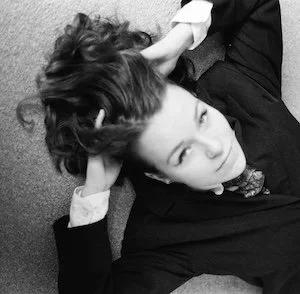
Introduction box
You’ve told us you decided you wanted to be a writer when you were seven? How did you know? And did that desire stay constant after that?
My Nana always said that her father, a miner, used to recite poetry on the toilet. So you could say it’s a family tradition. He’d travelled across the Irish sea, seeking employment, family in tow. The poems followed them to Blyth. The few books my Mum had growing up were the Bible, a Catherine Cookson and the Child’s Garden of Verse. She outread her school library by the age of 9.
My parents often read aloud to my sister and I, making up adventures that featured us as heroes. My mum performed tales in glorious voices, from kid’s delights like Haroun and the Sea of Stories, or adaptions of more sinister material, like Perfume! My dad proffered a bowdlerised form of The Master and the Margarita, replete with a thundering Pontius Pilate and a cigar-smoking hellcat….
My parents dreamt a world for us where creativity was celebrated – even if theirs was not nourished. Their wish grew teeth and claws in me. And so, I was forever scribbling away, drawing strange creatures in my exercise books, or hefting stacks of books from the library.
Kind teachers also encouraged me wholeheartedly, and each gave a blessing that I carried around, their words warming my pockets. My Year 2 teacher (who I beheld as a minor god), said lovingly that my handwriting looked like a ‘spider crawling across the page’. How else could I weave a web to catch her gaze?
Can you tell us about other things that made you want to write?
The everyday surreal of growing up in South London: finding a blue-beaded rosary draped over a dogturd, a fox letting me stroke her velvet head, talking to aunties on the bus, stale nights of teenage drinking atop Hilly Fields, old geezers playing dominos till the small hours, Mr Pink’s rainbow house on Loampit Vale, the treasure troves of objects left out on the roadside, where million-pound houses stand cheek by jowl with tower blocks, with injustice on every corner, how children are adultified.
Also, the relentless pull of the medieval – the icons bleeding on my mum’s lapsed Catholic shrine, learning about crossdressing saints, discovering that the Old English word for star is ‘tungol’, spotting sheela-na-gigs, that hot shiver of being watched on stage and feeling somehow profane.
You've also told us that you've managed – in spite of your grandmother's fears – to earn a living as a writer. (Well done!!) What advice would you give to others who want to follow in your footsteps?
Thank you! Although, I’d define ‘a living’ loosely here. I’m sustained financially by various jobs cobbled together. In a given year, sometimes I don’t make enough to pay tax. Both my landlord and student loan loom over me like drunk uncles.
For advice? Lean into what you enjoy about the act of writing, encourage yourself to play, as you might a child – your younger self. If you can reserve some small time (say, half an hour once a month), that is sheerly dedicated to this process, it will enrich your soul and your capacity to create. Let yourself frolic a bit. Automatic writing is helpful, as is an element of randomness… Use the Guardian photos of the day as inspiration, an overheard chat, Tiktok or a song lyric.
Free-flowing experimentation is especially important because the UK education system tends to cauterise us from our creativity, instilling a tickbox methodology of gobbited information. This Gradgrindish tactic goes hand-in-hand with a neutered understanding of Britain’s violent history of plunder. No teacher I know delights in this approach. It cements political apathy, inequality and barriers to artmaking amongst children who are already struggling… So we all have to counter this approach.
Rejection too is a continual part of sharing your writing with the world; but prize / publication culture can be arbitrary. I must confess that I submitted two versions of ‘A Devil’s Alphabet’ to other prizes, to no dice... You’ve got to carry the light for yourself as much as anything, so keep reading widely, writing in the crevices of time you have available.
Also, on envy – remember that you don’t know what has led to someone’s success in a particular field! For me, personally, I was raised by parents that truly loved, accepted and believed me. This was a gift.
Most industries are saturated with wealthy, privately-educated people, many of whom mistake their success for merit alone, rather than the natural consequence of years of investment, the silent staircase of family money and connections (often accompanied by deep emotional neglect). It’s such a confidence trick. The arts have been decimated, and today’s systems exclude the voices of marginalised people by design. What a loss for all of us.
I was very lucky to go to Oxford University, though the contempt for those considered ‘less-than’ was rampant, from my first night there when a public schoolboy asked me where I was from. He brayed at me incredulously when I mentioned Lewisham, letting me know what my place was.
My community is at the heartrock of the work I do – and I would encourage any writers to find theirs. I’m deeply grateful to the organisations that invested time, patience, funding, faith and care into me. These include Spread the Word, London Writers Awards, Barbican Young Poets, Writerz and Scribez, and Moniack Mhor, who build such incredible collectives, through which I met many of my closest friends. Additionally, The Brilliant Club, HEAPS/ Teachfirst Futures and UNIQ programmes supported me to apply to study English at university as a sixth-former.
All that affirmation changed me, making me understand that some form of a creative life was possible. But I recognise that being able to seek out these resources is a massive privilege. The vast majority are not allowed by society to even dream about these opportunities.
Have you done other jobs too?
Dog-walking, exit-polling, child-minding, artist’s assistanting, psychological studies, a stint in a gastropub as a kitchen porter and dishwasher. I was a Samaritan for a few years – at the branch where my parents were volunteers. That’s how they fell in love.
Currently, my career revolves around conversations: I run creative writing workshops, tutor English, give lectures to teachers, support blind and visually impaired creatives as their access assistant, create audio guides for museums and galleries, proofread, offer editorial feedback g, perform poetry, homeschool students, craft reviews and commissions, and visit hospitals to sing and write poems for elders… and more.
Can you tell us a bit about winning the prize and what it's meant to your writing?
Weeping on a park-bench when I found out. I was shocked by the money and the affirmation, the possibilities twinkling within. That surety of paying rent for a few months – without worrying about jobs cancelled last minute or scraping together applications. The prospect of time off to write. Knowing that if this story resonated with some readers, more of my writing might too. My work is inextricably entwined with my own experience of sexual abuse, both as a child and an adult, and the repeated denial of my extended family, suppressing generations of CSA. Now, I can speak of this, when my throat felt stamped out for much of my life. This spurs me on. It is the only justice allotted to me.
Can you also tell us more about your writing. I know you've published in several places, and work as a poet. Can we have links for places we can find your work?
Also, crucially, can you tell us anything about the things you are working on now?
Finding a way to keep my attic room cool – I’m such a wet slug in the heat! But also, I’m currently finishing my novel about Pope Joan. Have you heard of them? Wheeler-dealer, miracle stealer, the wisest man in Christendom, the icon who gave birth on papal procession. Medieval Rome howled at the devil’s ruse, and Joan was remembered for centuries as a lady trickster who stealthed into the Vatican, making a mockery of God himself… Joan is my darling one.
In our previous interview, you told us about lots of writers that matter to you. Now that we're going even more in depth, I'm hoping I can ask you about one book you love. Where and when did you first read it? What was it that connected with you? And do you see ways in which have influenced your own style?
Six Dinner Sid by Inga Moore, is a stonking picture-book about a clever cat who manages to wangle several meals a day from unsuspecting neighbours, who all believe the moggy to be theirs. As a little one, I was in awe of Sid’s antics. Now, I recognise this as a tale that curls its tail around parasitism, acknowledging what it means to exist in true community with people – with the daily care, dialogue and consistency this requires.
A child of Deptford, growing up in social housing, I knew and loved many of my neighbours on my street, from all walks of life. I grew up under watchful eyes and affection, sensing the histories behind every painted door, the strangeness of entering other uncanny versions of my own home, laid out in unfamiliar colours and furnishings. Coraline only confirmed my suspicions.
Do you also ever think about desert island books? Are there a few that you have to have with you? Or are you more like me, finding it impossible to narrow down the library in any way?
These days, I possess 11 library cards and am always dodging fines – although as a sidenote, the more books you take out in a library, the better their stats are. Local authorities are then more likely to consider them valuable assets worthy of protection.
In an ideal world, I’d carry a great bookcase on my back, turtle-style, hefted from place to place. But the reality of renting in London means limited space, and lugging all your possessions in an infernal parade every time you get kicked out. I’ve given many of my dearest books to students I work with, or to friends.
My (enormously patient) partner is custodian to a large stockpile I’ve gathered from Amnesty, Oxfam and various libraries – which I hope to gobble anon.
Back to style, what are you aiming for in your writing?
To marry the flatulent and the holy.
And is there anything you are trying to avoid?
The endless obnoxious inner voice muttering ‘you’re shit, you’re shit’. Nominative determinism is too rude. Also, trying to limit the chuntermill, to winnow out chaffish indulgence.
Talking of avoiding things, how do you feel about the AI industry?
I worry most about how it feels towards me – which is to say, it doesn’t worry about me at all. Or any humans.
Anything that destroys neighbourhoods, the planet, free-thinking, literacy and volition is no friend to my brainstew.
We live in a climate that actively dissuades us from trusting in our own decision-making capacities, that chafes away at curiosity in a clickhole torrent. There are obvious dangers in a machine sweet-talking you at every juncture…
Over countless revolutions and wars, humans fought to be able to make our own decisions. Now so many of us are so worn down that we’re relying on machines to do it for us – guzzling water and poisoning the supply for many disadvantaged communities in the process.
That’s not to shame anyone who uses AI. Many people I care about do, especially for its access tools. But it will entrench fascism in this time of surveillance, with billionaires profiting the most.
Back to fun. Can we talk about what else you enjoy? Do you have music recommendations? Films? Any other tips for things we might enjoy?
Too many – I’m a gay little nugget and a glutton.
TV: I May Destroy You, How it feels to be a girl, Giri / Haji, Yellowjackets, Big Boys, Alma’s Not Normal.
Music: Beverly Glenn-Copeland, Judee Sill, Jean Grae, Julius Eastman, Ganavya, Emily Portman.
Films: The Five Devils, I am not a witch, The Blue Kaftan, Nickel Boys, Happy as Lazzaro, 20,000 Species of Bees, Joyland, The Parrot, So Long My Son, The Zone of Interest, Blue Jean, Rocks, The Sound of Falling, Night of The Hunter, Little Trouble Girls.
Art: Jesse Darling’s saintly lions, Ṣọlá Olúlòde’s blessed queer lovers in blue, and lodestar photographers of different queer communities: Zanele Muholi, Donna Gottschalk, Sunil Gupta and Roman Manfredi.
Could you also please tell us about a wonderful thing (anything!) you know about?
That photograph of beloved Marsha P. Johnson hugging her plush toy Snoopy! Oh and Agnes Varda’s specially made potato costume!
What else gives you hope?
I spend two Tuesdays a month writing poems for elderly patients in hospital, offering them some scrap of care amid the sickness and the vulnerability. I am trying to recognise their life in words. To say to them, you matter, you are worthy of being written in a world that might unwrite you. This is to make a something of the nothing we might feel lies within us. A nothing that has been written upon us. I think if writing, if listening can do anything, it can offer possibility in the silence, a way to rise into survival out of the suffering.
It is a terrible thing to feel unloved; wherever you might find yourself – in school, in a prison, in a bedroom, on a ward, on the street-curb, on a lifeboat trembling in the sea, in a hospital being bombed. That cruelty lies within the seams of empire; a message inculcated over time – you are worthless, no-one cares, you would be better off dead.
We see in tandem the dictates of a government who spits on refugees whose countries are ravaged by imperialism, who imprisons activists for destroying arms that murder Palestinians during this on-going genocide, who would prefer us non-binary and trans folk to disappear, cutting off any pathway for affirmative exploration. This is, as Patricia Hill Collins explores, all part and parcel of the ‘matrix of domination’; what keeps the cobalt mines running in Congo, what allows the crimes against humanity in Sudan to continue, as the UK state profits from wars.
In my small way, after nearly ten years of working as a creative facilitator in community spaces across the country, I know the importance of listening. As Simone Weil said, ‘attention is the rarest and purest form of generosity’.
I’m grateful to have sat with former nurses and railway workers, mothers and daughters, refugees and pianists, priests and unhoused people, the dying and those who move within dementia’s realm, elders with whom I do not share a language, apart from music, singing and laughter. All those stories and lives shimmering. Patients have cried, tucked poems into Bibles, sent photographs to their family chat, have murmured, no-one has ever written about me, you have brought me upliftment, I will not forget you.
I will not forget them either. Often, the cruelty of the world makes me pause, wonder if what I can do has any value. It is the nature of racial capitalism to make us feel as individuals, artists or otherwise, that what we offer does not matter in the face of such daily pain. To disassociate us from our communities at home and across the globe, to prevent the power that we have when we come together.
But I think hope is finding a something from the nothing. It is rising up when all else seems squashed. It is the Palestinian notion of sumud, a steadfastness in the face of annihilation, resisting in any possible way. Isabella Hammad writes that ‘denial is based on a kind of knowing. A wilful turning from devastating knowledge, perhaps, out of fear’. We cannot turn away in fear. There are kind people everywhere.
Every day, my community reminds me of the possibilities of resistance. My dad has always grown vegetables to give my neighbours, across different streets. My housemates formed part of the Tottenham Family Fight Back campaign, which organised to save the community centre Living Under One Sun from demolition. As part of a massive collective of parents and activists, they occupied the centre for weeks, sleeping on the floor, befriending the security guards, and running holiday clubs for kids and their families for painting, DJing, knitting, and songwriting.
At Christmas, we worked with the children to put on a play about their experiences, bringing together their poems and stories to make a show that packed out the venue. Our play was called ‘Our Sun Will Rise Again’. And eventually, after months of campaigners tirelessly negotiating and proposing new possibilities, the council agreed to some of their demands. Whatever the community centre’s next form will be, it’s one we will carry with us.